No products in the cart.
If you’re the kind of person who keeps extra food on hand, a flashlight that actually works, and a first-aid kit that’s more than a handful of bandages, you’ve probably thought about your firearms the same way: as tools you may need if something goes wrong at home.
A solid home defense pistol setup isn’t magic, and it’s not a shortcut around good judgment or training. But for preparedness-minded gun owners, having a handgun you understand, can run reliably under stress, and can maintain yourself is a big part of feeling ready for emergencies.
Before you think about parts, upgrades, or builds, make sure the foundation is solid:
A home-defense pistol setup that ignores the law or safe handling isn’t preparedness, it’s a liability. A good setup starts with doing things the right way.
Even if you bought your pistol complete from the factory, approaching it with a DIY mindset has real benefits.
When you learn how the parts work together, install or swap certain components yourself, and take responsibility for cleaning and inspection, you build a level of familiarity that’s hard to get any other way.
That deeper understanding means:
For a home-defense handgun, that kind of familiarity is worth a lot. If something feels wrong, you want to recognize it before you’re depending on that gun in the middle of the night.
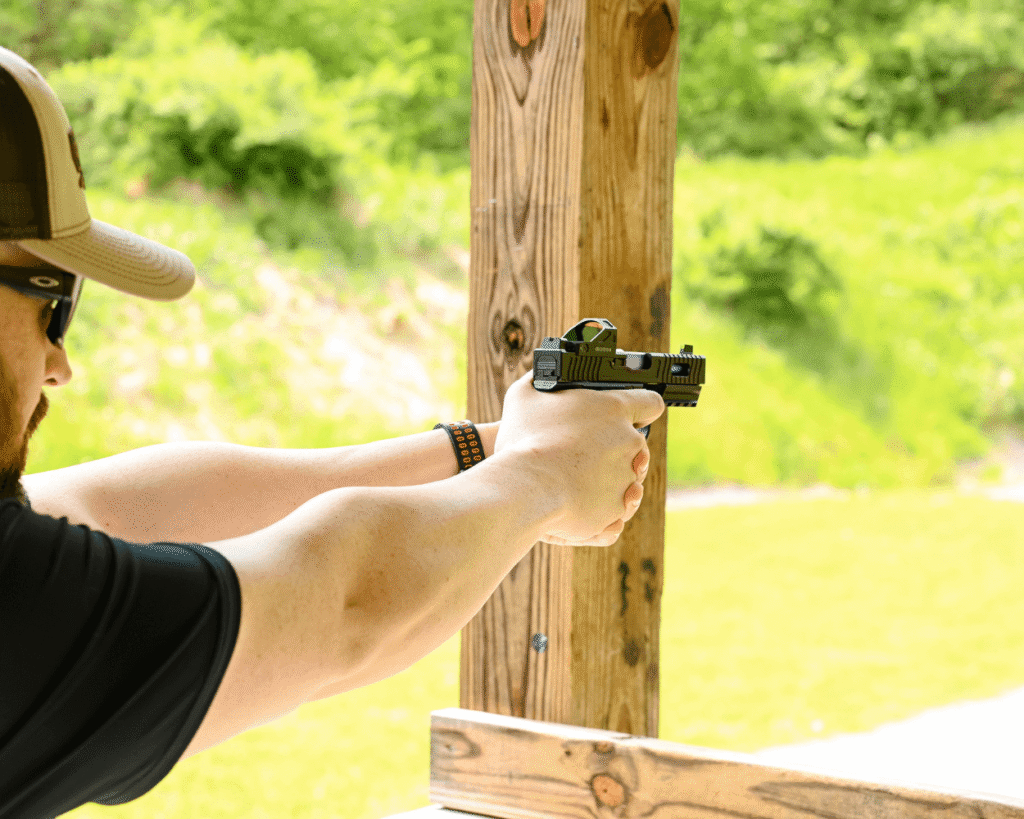
Not every “upgrade” is an improvement. For a home-defense pistol, the goal is function first, comfort second, looks third.
A smart home-defense pistol setup focuses on changes that genuinely improve control, reliability, and your ability to make good hits under stress.
The trigger has a huge impact on how confidently you break shots when adrenaline spikes.
From the factory, many triggers are designed to be a safe middle ground. For home defense, most people want:
Upgrading to a quality trigger designed for your platform can help you:
If you install an aftermarket trigger, choose reputable components, keep safety in mind, and test extensively on the range with the ammo you actually plan to use for home defense.
If the pistol doesn’t fit your hand, everything else gets harder. A good home-defense handgun setup lets you get a secure, repeatable grip every time, even when you’re half-awake or under stress.
You might consider:
The end goal is simple: when you grab the pistol, whether it’s 2 p.m. at the range or 2 a.m. in the dark, your hands land in the right place without you having to think about it.
In a defensive situation, seeing clearly and aiming quickly matters much more than fancy aesthetics.
If you’re staying with iron sights, higher-visibility options are a big upgrade over small, low-contrast stock sights:
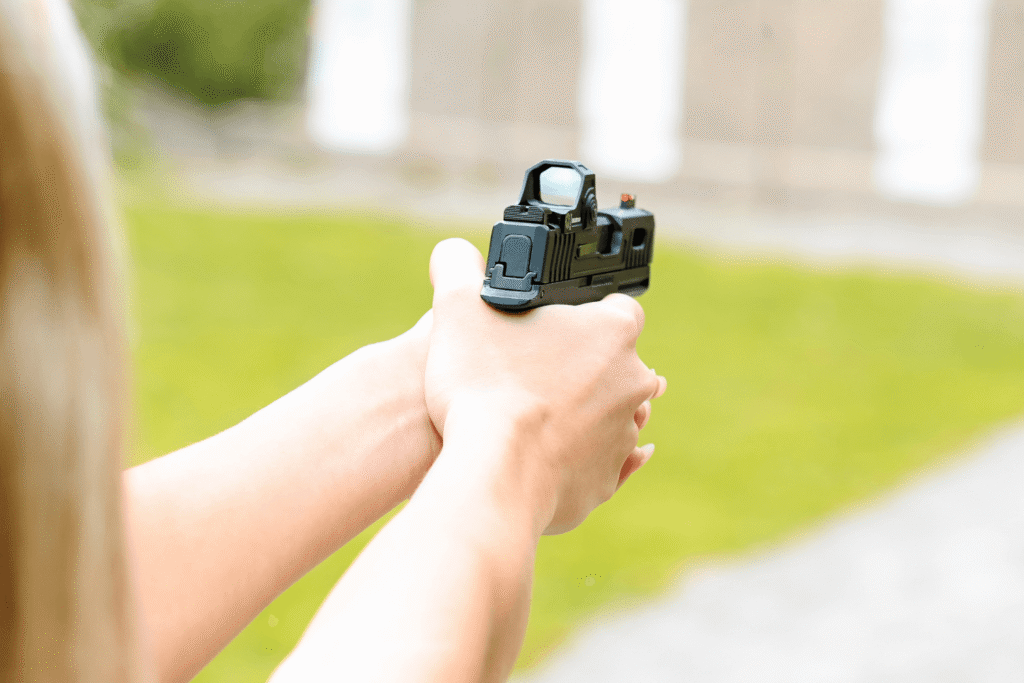
Red dot sights on pistols have become popular in home-defense pistol setups for good reasons:
If you go the optic route, prioritize:
For a home-defense handgun, your sighting system should be simple, durable, and repeatable, not overly complicated or dependent on tricky settings.
Small details can make a big difference when adrenaline hits.
Some shooters benefit from:
Again, the point isn’t to bolt on every possible gadget. It’s to make manipulations like mag changes, lock-back checks, and clearing malfunctions a little smoother and more consistent.
On the support side of your home-defense pistol setup:
Preparedness isn’t just the gun; it’s how you carry, store, access, and support it.
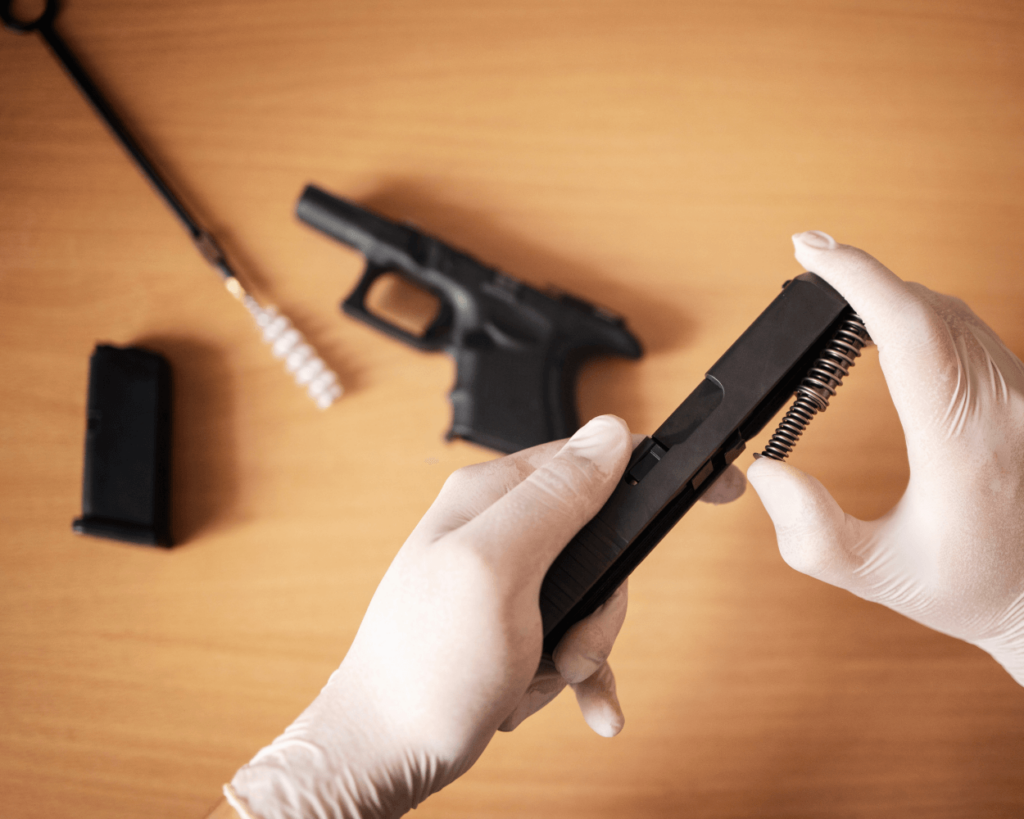
A pistol you haven’t shot and cleaned in years is not a home-defense plan, it’s a question mark.
Build habits around:
Regular inspection: look for unusual wear, cracks, or loose parts
Routine cleaning: especially after range sessions, and occasionally even if it hasn’t been fired in a while
Function checks: after any parts changes, disassembly, or reassembly
If your pistol uses a red dot or weapon light, batteries need a schedule too. It’s better to swap a little early than realize you’re on borrowed time when you actually need the gear.
No amount of parts or clever setups can replace practice. A well-thought-out home-defense pistol setup is easier to use, but you still need to put in the reps.
Focus your training on:
Think of hardware as the foundation and training as the structure you build on top of it. Both matter.
The ideal home-defense handgun isn’t the one with the flashiest parts; it’s the one you know, trust, and can keep running.
That usually means:
JSD Supply focuses on parts and components that help you configure pistols you can rely on when it matters. If you’re ready to bring a DIY mindset to your home defense pistol setup, start with quality parts, build deliberately, and test everything thoroughly.
Your gear should never be a mystery when you’re under pressure. The more you understand your pistol and how it’s put together, the more confident you’ll be if you ever truly need it.