No products in the cart.

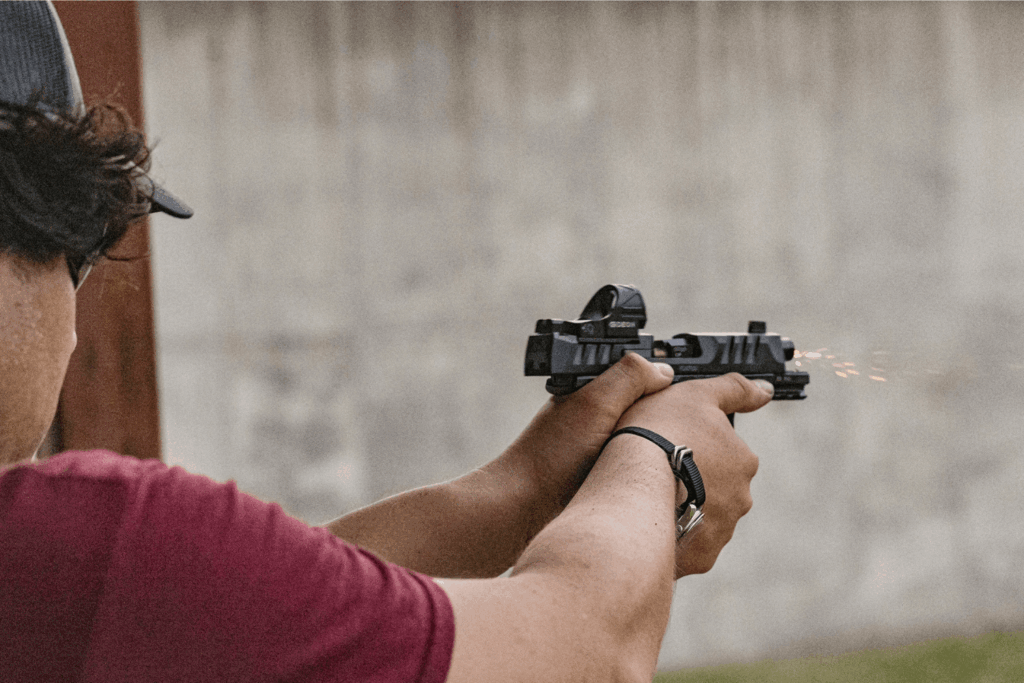
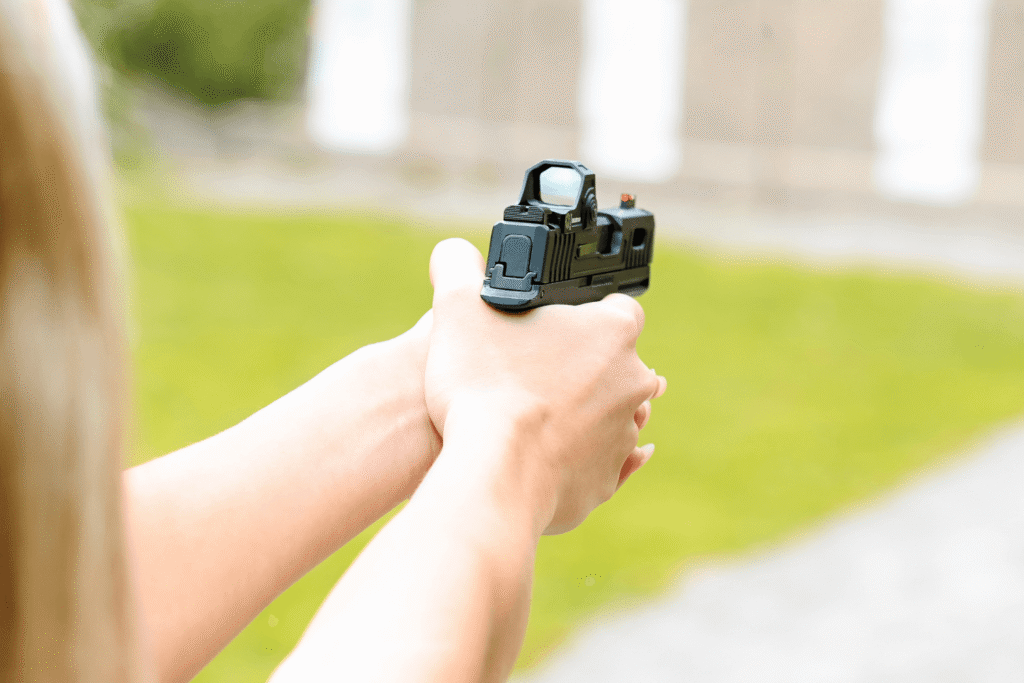
Red dots have gone from “niche competition gear” to a normal sight on carry, home‑defense, and range guns. They’re fast, precise, and easier on aging eyes than iron sights. But none of those advantages matter if your optic isn’t properly zeroed.
A poor or rushed zero is one of the main reasons people say, “I tried a red dot and hated it.” The good news is that zeroing doesn’t have to burn through a box of ammo or turn into a frustrating science project. With a little preparation and a simple process, you can get your pistol dot dialed in efficiently and safely.
In plain language, zeroing your red dot means adjusting the optic so that your point of aim (POA) and point of impact (POI) match at a specific distance. When the dot sits on the center of the target at that distance, your rounds land there, too.
Because bullets travel in an arc and not a perfectly flat line, your POI will sit slightly above or below the dot at distances closer or farther than your chosen zero. That’s normal. The goal is not “perfect at every distance,” but instead a practical zero that works well for how you use the pistol.
For most owners, that means:
You’ll see a lot of debate online about whether you should zero at 7, 10, 15, or even 25 yards. Optics manufacturers and trainers commonly highlight 10–20 yards as useful ranges, with many recommending 15 yards as a solid all‑around choice for defensive and general‑purpose pistols.
Here’s a high‑level way to think about it:
Pros:
Cons:
Pros:
Cons:
Pros:
Cons:
If you’re not sure where to start and you mainly use your pistol for home defense and range practice, a 15‑yard zero is a very reasonable middle ground. You can confirm at 10 yards and at whatever longer distance your range allows to see how it behaves.
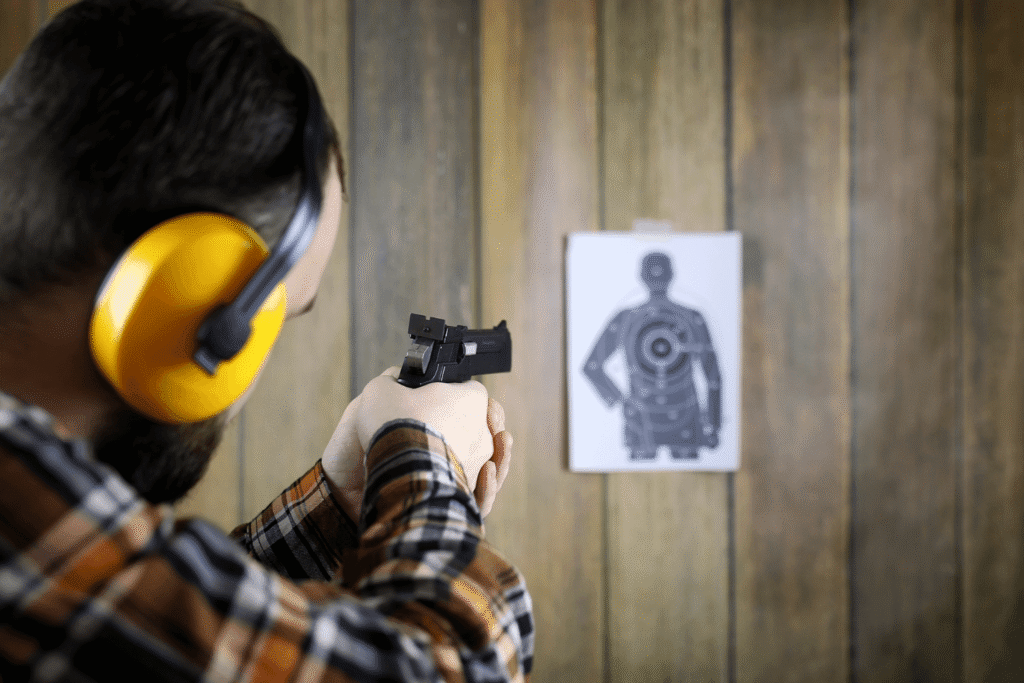
Before you start adjusting anything, make sure you and your equipment are set up for success:
Double‑check that the pistol is unloaded when you’re transporting it to the range, setting up gear, or handling it off the firing line. Always follow the four fundamental firearm safety rules.
There are countless “systems” and “tricks” out there, but they’re all variations of the same idea: shoot careful groups, see where they hit, and adjust the optic so the group moves toward your point of aim.
Below is a straightforward way to do that without burning through a pile of ammo.
Begin at a shorter distance than your final zero (for example, 5–7 yards). The goal here isn’t a perfect zero, it’s just to make sure your shots are consistently hitting the target so you can see where the gun is printing.
If all your shots are missing the target entirely, stop and verify:
Once you’re safely on paper, start thinking in groups of three to five rounds fired with as much consistency as you can manage.
Focus on:
It’s normal for pistol groups to be larger than rifle groups, especially for newer shooters. Don’t chase individual flyers; look at where the center of your group is landing compared to where you were aiming.
Most pistol red dots have clearly marked windage (left/right) and elevation (up/down) adjustments. Consult your optic’s manual for the specifics on how far each click moves the impact at a given distance.
General tips:
Continue this cycle (group → evaluate → adjust) until your group is centered around your point of aim at your chosen zero distance.
Once you’re close at your shorter distance, move the target to your actual zero distance (for example, 15 yards) and repeat:
Your goal is to have a repeatable group that clusters around your aiming point. Once you’re satisfied, resist the urge to “tinker” unless you see a consistent, repeatable error.
Zeroing doesn’t have to mean chewing through an entire case of ammunition. A few smart habits go a long way.
Before or between live‑fire groups, practice safe dry fire (in accordance with all safety rules and only in appropriate environments). This helps you:
When your fundamentals improve, your groups shrink, and you need fewer rounds to make reliable adjustments.
A common mistake is adjusting the optic after every shot. That wastes both ammo and time.
Instead:
If you feel yourself getting tired, frustrated, or sloppy, pause. Shoot fewer, more deliberate groups rather than rushing strings of fire. Clear thinking and good fundamentals save more ammo than any trick.
Even experienced shooters run into the same handful of problems when zeroing pistol dots.
Here are a few to watch for:
If your grip is inconsistent and your trigger press is jerky, your groups will wander, and you may blame the optic when it’s really the fundamentals.
Fix:
Slow down. Use a firm, consistent grip and a smooth, straight‑back trigger press. If possible, practice from a more stable shooting position (bench or supported stance) to remove some wobble while you zero.
Trying to zero at 25 yards when you’re still developing basic pistol skills can produce unpredictable groups that are hard to interpret.
Fix:
Begin at a shorter distance where you can keep most shots on a small area. Once your fundamentals and zero are solid there, confirm at longer range and make any fine adjustments.
Different bullet weights and velocities can shift your POI. If you switch between several types of ammunition while zeroing, you’ll get confusing results.
Fix:
Pick one ammunition type for zeroing (ideally the load you rely on most) and stick with it for the entire process.
Large, frequent turret adjustments tend to overshoot the correction, leaving you bouncing back and forth around your true zero.
Fix:
Turn adjustments conservatively and give each change at least one full group of shots before deciding whether more correction is needed.
Once your pistol red dot is properly mounted and zeroed, it should generally hold that zero for a long time. That said, it’s smart to re‑check it periodically, especially if:
You don’t need a full zeroing session every range trip, but confirming that your dot is still hitting where you expect is a good habit.
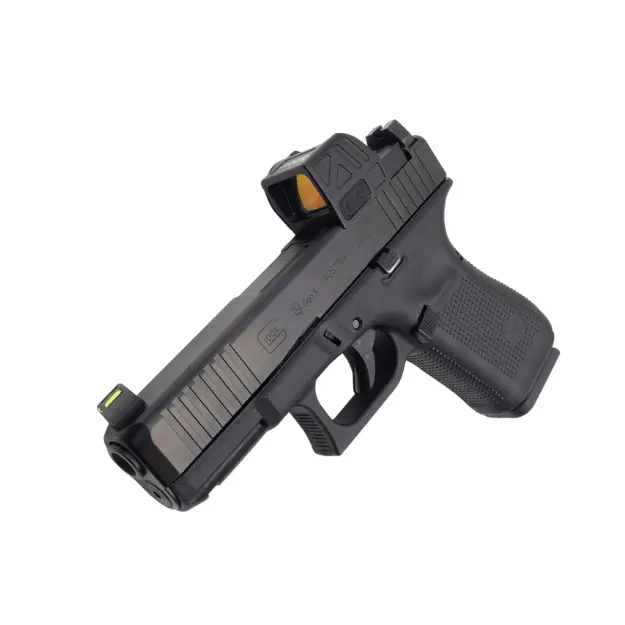
Some optics are simply easier to live with than others. Features that help during zeroing and long‑term use include:
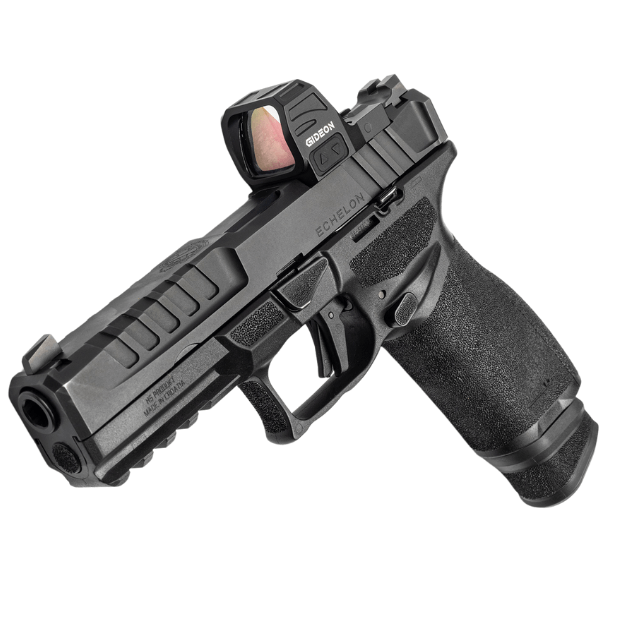
At JSD Supply, you’ll see a range of pistol red dots from brands like Gideon Optics, Holosun, Trijicon, Swampfox, and Primary Arms, along with slides and mounts that pair well with them. Matching the right optic to the right slide cut or adapter plate, and then giving it a solid zero, is what turns a good idea into a reliable, confidence‑inspiring setup.
Zeroing a red dot isn’t about perfection on paper, it’s about trust. When you present the gun, see the dot, and press the trigger with good fundamentals, you want to know that the rounds are going where they should.
By:
…you’ll get much more value from your optic and enjoy shooting it far more.
Once your dot is zeroed, the next step is training with it; building the draw, presentation, and shot process that let you actually use that zero under pressure. But it all starts here: a solid, efficient, and confidence‑building zero.