No products in the cart.


Buying a pistol red dot should be simple: pick an optic you like, mount it, go to the range. In reality, one thing confuses more people than almost anything else:
Footprints.
Terms like RMR, RMSc, and ACRO show up in product names, slide descriptions, and mounting plates, yet many shooters aren’t sure what they actually mean. Choosing the wrong footprint is one of the fastest ways to end up with an optic that doesn’t fit your slide, delays your build, and creates a lot of frustration.
A red dot footprint is the specific mounting pattern used to attach the optic to a slide, plate, or mount. It includes:
Different manufacturers often design around a few common industry footprints, but those patterns are not interchangeable. For example:
Choosing the wrong footprint leads to:
The good news: once you understand the main footprints and how they relate to your pistol slide, the process becomes much more straightforward.
There are many footprint patterns on the market, but three dominate the modern pistol optics space:
RMR footprint – Full‑size / duty and general‑purpose pistols
RMSc footprint – Slimline, micro‑compact, and subcompact pistols
ACRO footprint – Enclosed “mailbox style” optics with a clamp-type interface
Let’s walk through them one at a time and connect them to real‑world use.
The Trijicon RMR footprint is one of the most widely used patterns for full‑size and compact pistol red dots. Originally popularized by the Trijicon RMR, the pattern has been adopted by a large number of other optics manufacturers.
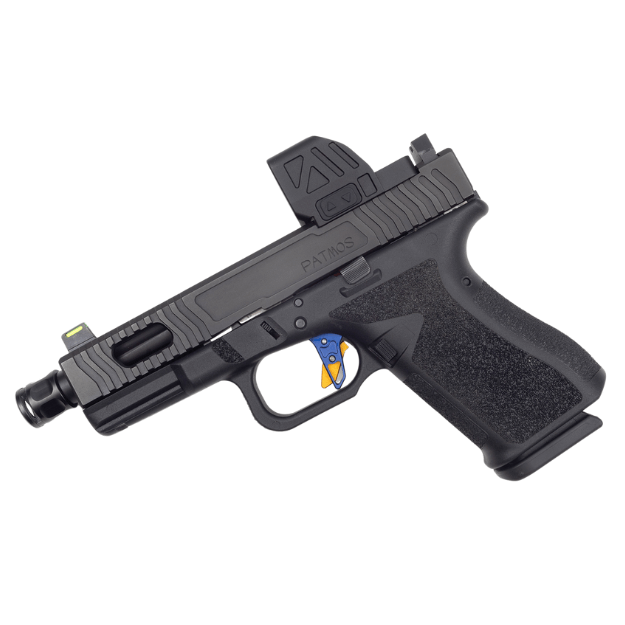
Without going deep into engineering drawings, the RMR footprint generally involves:
RMR‑pattern optics are commonly found on:
The RMR footprint is associated with:
Because of that, you’ll see a large ecosystem of:
Specific models will depend on what JSD Supply is carrying at any given time, but RMR‑pattern optics typically include:
The key takeaway: if you’re working with a full‑size or compact slide cut for RMR, you’ll usually find a wide range of optics options.
As carry guns got smaller, so did red dots. The Shield RMSc footprint is a compact pattern designed for slimline and micro‑compact pistols, where both slide width and optic size need to stay minimal.
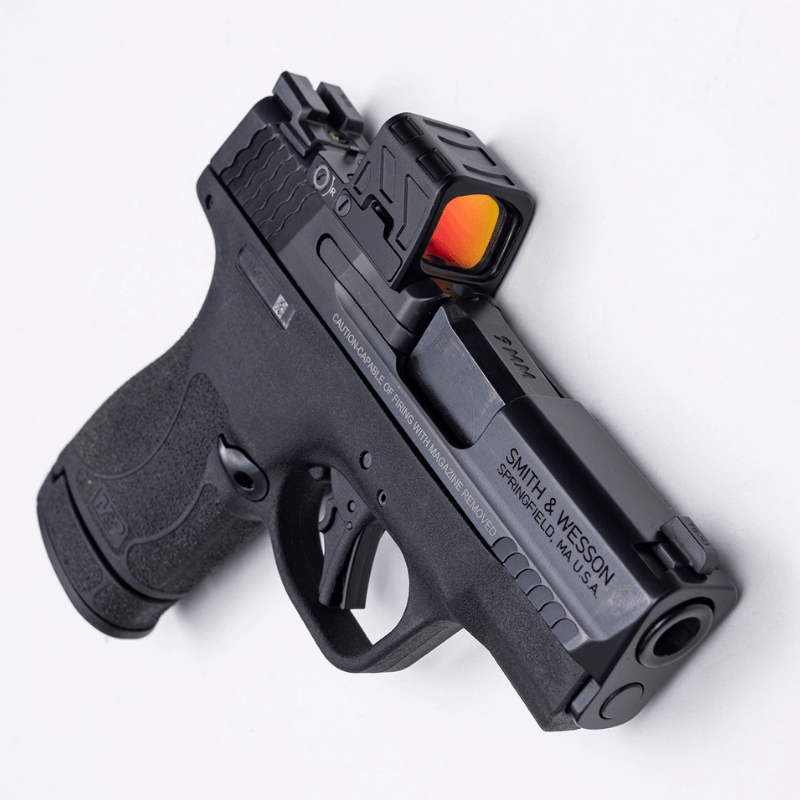
RMSc‑style cuts are commonly found on:
These setups demand optics with:
In practical, user‑focused terms:
RMR footprint: Think full‑size or compact carry/duty gun, often with greater durability and slightly larger window.
RMSc footprint: Think slim, easy‑to‑carry pistol designed for discretion and lighter weight.
Even though some RMSc‑pattern optics can be adapted to other mounts, you cannot assume an RMSc optic will fit an RMR slide cut, or vice versa, without the correct plate or adapter.
You’ll see RMSc footprints used by:
When building or upgrading a slim carry pistol, the product description for your slide or frame will usually specify whether it’s cut for RMSc.
The ACRO footprint was introduced with the Aimpoint ACRO series and is associated with enclosed emitter pistol red dots. These optics are often described as “mailbox” style due to their rectangular, enclosed housing.
Unlike RMR/RMSc, which use screw patterns on the base, ACRO‑style optics typically:
ACRO‑pattern optics tend to appeal to shooters who want:
ACRO footprints are less universal than RMR but are becoming more common as more brands release enclosed‑emitter pistol dots.
Beyond RMR, RMSc, and ACRO, there are a few other names you’ll encounter when shopping for optics or slides:
Docter / Noblex pattern – Used by several compact and micro red dots.
Leupold DeltaPoint Pro – A distinct footprint found on some slides and aftermarket plates.
Brand‑specific variations – Some manufacturers have proprietary cuts and plate systems (for example, certain optics‑ready pistols that use brand‑specific plate kits).
You don’t need to memorize every pattern. For most modern handgun builds, focusing on RMR, RMSc, and ACRO will cover a significant share of what you’re likely to use.
When you’re standing in front of a wall of optics (or scrolling through pages of products), the key question is simple:
“Which red dot actually fits my slide?”
Here’s a step‑by‑step way to get that answer.
First, identify:
If you’re using an aftermarket slide, its product description should clearly state:
Quality optics listings will specify the footprint in the description or technical specs, often in language like:
Match that language against your slide. If the slide is cut for RMR, choose a red dot with an RMR footprint or a compatible adapter plate.
One common mistake is assuming that if your slide is “optic‑ready,” any red dot from a well‑known brand will fit. That’s not the case.
If you’re unsure, always cross‑check both the slide and optic descriptions, or reach out to support with the exact models you’re working with.
If something isn’t perfectly clear, it’s worth sending a quick message with:
Catching a mismatch before checkout is much easier than troubleshooting it on your bench.
The exact combinations will depend on what JSD Supply has in stock, but here are the kinds of pairings that often make sense:
Can I mount an RMR red dot on an RMSc slide?
Not directly. The footprints are different. You would need a properly designed adapter plate (if one exists for your specific combination).
Can I “force fit” an optic that almost lines up?
No. Even small misalignments can cause reliability issues, poor zero retention, or damage to the optic or slide. Use the correct footprint or a vetted adapter.
Does the footprint affect durability, or just fit?
Footprint affects both. A properly matched footprint and mount pattern help the optic handle recoil and impact more effectively.
If my pistol is optics‑ready from the factory, is that enough info?
Not by itself. You still need to know which footprint or plate system it uses, so you can pick a compatible red dot.
Footprints don’t have to be confusing. Once you understand:
…you can shop far more confidently and avoid one of the most common pitfalls in the pistol optics world.
Whether you’re building a concealed carry pistol, a duty‑grade setup, or a range gun, starting with the correct footprint ensures that the red dot you choose will actually fit, stay put, and hold zero once it’s mounted and dialed in.
If you’re ever unsure, checking your slide description and optic specs, or reaching out with those details, is the easiest way to get from “maybe” to a clear, reliable answer before you buy.